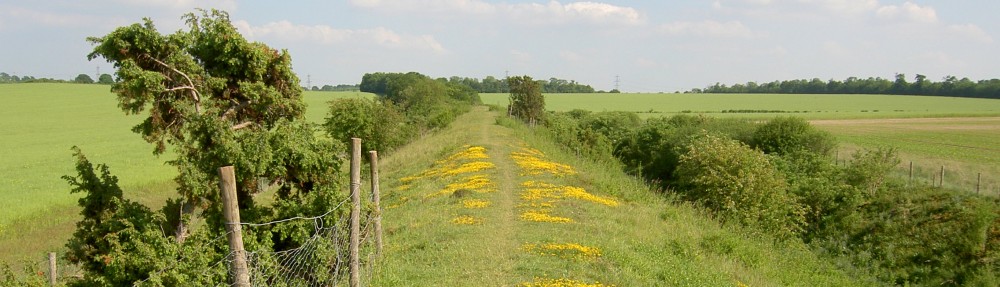
Parts of both Fleam Dyke and the Roman Road are Sites of Special Scientific Interest (SSSI), well known for their chalk grassland flora and fauna.
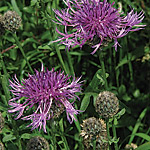
Greater knapweed
Once, much of Cambridgeshire between the fens and the clay-capped ground to the southeast was covered with chalk grassland grazed by sheep. Over the last 200 years, most of this area was ploughed to grow arable crops and relatively little survives, the only remnants being areas that were impractical to farm such as parts of the Roman Road, the Devil’s Dyke and Fleam Dyke.

Chalkhill blue butterfly
Grazing by sheep and subsequently by a high population of rabbits maintained the chalk grassland flowers, but following the spread of myxomatosis in the 1950s, both sites became increasingly covered in scrub. In recent years, however, large areas have been cleared and the situation is gradually improving. In selected parts, the grassland is now mown regularly and the grass cuttings are removed to reduce nutrient levels and encourage wild flowers.
Find out more about:
Other species (mammals, birds, reptiles and fungi)
 Friends of the Roman Road and Fleam Dyke